
This Picture Is Worth Far More than a Thousand Words

Sultana as seen in original photo and after colorization and enhancement (via MyHeritage and Photoshop Elements)
The fact that this image exists is remarkable enough, but the story that spilled out of it is even more so. Included in a scrapbook of immigrant photos taken between 1890 and 1892 by E.W. Austin who worked at the Barge Office while Ellis Island was being constructed (well before the widely known Augustus Sherman and Lewis Hine collections), it’s clear that it meant more to him (or perhaps the recipient) than most as close inspection reveals that it had once been framed. And then there was the caption which was more detailed than usual: “Sultana Numeir, age 18 — Lebanon, Syria — speaks English & Spanish.”
Wondering whether I could pick up Sultana’s trail to learn what had become of this striking young woman, I received a quick assist when I realized a neighboring photo in the album also included Sultana. This one was described as “a family of 4 from Syria, Turkey — Two Hebrews from Oran, Algiers.”

Sultana with her mother, brother, and father along with two fellow travelers
It didn’t take long to find a matching family with a daughter named Sultana arriving around the expected time in New York passenger records. They had sailed from Italy which explains why the entries for Sultana and her brother said “figlia” and “figlio” (son and daughter) and their mother’s “moglie” (wife). Listed above them was their father/husband, Soliman Numeir.

Arrival record of Numeir family (Ancestry)
Ages were given for each and the family was entered as Moroccan. This last seemed a little odd since they were supposedly Syrian, but I’m accustomed to seeing contradictions in records of this vintage, so was still optimistic that this would give me enough to follow them forward in time.
I tried the usual resources for immigrants — census, naturalization, city directories, etc. — but came up empty. Where had they gone? Had they changed their name, moved elsewhere, or maybe returned home? Knowing it was a long shot, I turned to newspapers. Recent immigrants rarely made the papers unless there was trouble of some sort, but you never know and I was running out of options.
Much to my surprise, I found that Sultana had quickly made her mark. Sometimes solo and sometimes with her mother, she traveled to assorted East coast cities (Buffalo and Boston were particular favorites) where she would tell their story — mostly to Christian women’s groups — and sell embroideries.

Article about Sultana “Numier” (Buffalo Courier, 29 April 1892, Newspapers)
The family had left Syria due to “religious troubles” and gone to Morocco where they served as Christian missionaries. This explained why their arrival records had noted the Numeirs as Moroccan. Other details varied across the articles I found (not the least of which was their religion which rotated through Catholic, Protestant, and Unitarian), but Sultana was consistently described as a recent immigrant, fluent in several languages and seeking to further her own education as well as her brother’s, and who appreciated what America had to offer. She left a favorable impression and was considered attractive and a touch exotic — enough so that an artist painted a portrait of her in a “characteristic ‘eastern’ pose” that was put on public display.

Portrait of Sultana by Edward Glover Niles (The Boston Daily Globe, 3 March 1896, Newspapers)
Then her story took another curious turn in early 1895. Without warning, Sultana Francesca Neumeyer (the family had Germanized their surname) eloped and married a man named Edward Luther Perry in New York City. This resulted in a flurry of gossipy articles that barely disguised a fascination with what was regarded as a mixed race marriage.
Edward was a Harvard student described as a grind (“his acquaintances are few, his interest in the affairs of the college limited, his abode cheerless”) and “modest, unassuming and not inclined toward handsomeness.” In some respects, Sultana was treated more kindly (“beautiful, her manner vivacious, her accomplishments many”), but her biographical sketches also included doses of 1895-style racism and at times veered toward fiction. Depending on which version you read, she had been born in Cadiz or Madrid, Spain or Gibraltar. Her purportedly German father and Spanish mother (or parents of those respective heritages, even though both were Syrian) had toiled as missionaries in Morocco and Syria where “the sun imparted a charming duskiness to her skin, and the climate mellowed her temper.”¹ And she had either come to America at the age of three or three years ago.
This undesired attention prompted Sultana’s new in-laws to issue a “doth protest too much” response insisting that they were pleased with the marriage and that the couple had wed in New York to “prevent any unnecessary talk” during their son’s senior year at Harvard — a claim that, if true, clearly backfired.

Sultana’s in-laws’ response to the marriage (The Boston Daily Globe, 9 February 1895, Newspapers)
Some of the articles about Sultana and Edward’s February 1895 marriage said that they intended to go overseas as soon as he finished his studies, and this was corroborated by his application for a passport that May. Shortly after, they left for Sultana’s family’s hometown — now Zahlé, Lebanon.
It must have shocked everyone just months later to read in the same newspapers about Sultana’s death. Announced initially in Boston, her obituary would appear in papers across the country over the ensuing months. 22-year-old Sultana who had captivated so many in the five years since her arrival in America had succumbed to consumption on December 5th.

Announcement of Sultana’s death (The Boston Globe, 1 January 1896, Newspapers)
Her husband, Edward L. Perry, lingered for several months working with the Presbyterian Mission during the Hamidian (Armenian) Massacres, finally returning to the U.S. in August 1896. Less than a year later, he resumed his studies and remarried, starting a new family. He would later report in Harvard updates that he had “done absolutely nothing worthy of note.”

Harvard College Class of 1895, Fifth Report (Google Books)
So that’s the end of Sultana’s story. Or was it?
Sultana’s drama, it turned out, was not the only one playing out in the Numeir family. Sparked by later records pertaining to her mother that didn’t quite seem to make sense, I shifted my attention to Joseph, Sultana’s brother who had arrived with her that day in New York’s harbor.
Joseph was slippery to follow — partly because he casually bounced between his first and middle names of Joseph and John (which is why I’ll refer to him as JJ from this point). These two common names coupled with all the variations of Numeir that had cropped up (e.g., Neumeyer, Neumire, Newmyer, etc.) produced a frustrating number of candidates to sift through while trying to trace him. The reason I bothered, though, was his mother who resurfaced in America in the 1900s.
The whole family had disappeared by the time of the 1900 census, but Sultana and JJ’s mother, Mary, showed up again two years later — and she wasn’t alone. Now she had a “son” named John who had been born in 1895 in — depending on which source you consulted — the U.S., Syria, or England. His specifics shifted over time with him finally settling as John J. Neumeyer, grandson of Mary, born on 21 December 1895 in Hull, England. And to be clear, John wasn’t the one tweaking the details; his grandmother was.
Given her age, it made more sense for John to have been her grandson. It seems she had fibbed to make it easier to enter the country, but whose child was he? John had the Neumeyer name, suggesting he would have been JJ’s son, but was this a fabrication to facilitate her traveling with this youngster? And how and why did Hull, England enter the equation?
So began another research dive that would take me on an astonishing journey. Rather than retrace the quest step by step since it was complicated and anything but linear, I’ll share a condensed rendition of the saga of Sultana’s brother, JJ.
Around 1894, he married Mary E. Wood, an English immigrant. Soon after in January 1895, they had a daughter named Rose in upstate New York. He worked as a photographer (an interest possibly triggered by the photos E.W. Austin had taken of them upon arrival) and was doing well, so you might have thought they’d stay put. But in September of that year, the young family traveled across the Atlantic to England. Maybe his wife was homesick or they thought the prospects for his business were better there?
Not quite.
The family went to Lincolnshire, where JJ and Mary soon split. Mary left Rose with JJ, but he wasn’t able to care for her, so he approached the Glanford Brigg Board of Guardians to have Rose boarded out at his expense.
But on 6 August 1896, JJ — all of 27 years of age — died from nephritis uremia in an infirmary in nearby Hull (presumably where Hull came into the picture). When that happened, the woman who had been caring for Rose gave her to the Glanford Brigg workhouse because she was no longer being paid. Against the odds, a woman who belonged to the Board of Guardians was so taken with Rose that she adopted her.
Meanwhile, JJ’s wife, Mary, professing that their marriage was invalid, wed her childhood sweetheart in July. Since she had taken on another surname about a month before JJ died, those who knew that Rose’s mother was alive couldn’t find her, so the adoption went ahead.
There are many elements of this story that are peculiar, but one that stands out is that Mary, living about 20 miles away, didn’t know about her daughter’s adoption, but somehow Rose’s grandmother in Syria got wind of it and showed up in England to claim her in October. Unfortunately, the board’s minutes and relevant inmate registers and boarding out records have gaps around the time this was happening, so what is known is derived from newspaper accounts.

Custody dispute over Rose (Sheffield Daily Telegraph, 30 October 1896, BritishNewspaperArchive)
According to several articles, the woman who had adopted Rose didn’t want to give her up, but the board initially decided in the grandmother’s favor. Efforts to have Rose’s mother, Mary, weigh in were fruitless since they hadn’t found her, so the turmoil continued for two months with attorneys for both sides joining the fray.
In mid-November, the board concluded they had lost authority the moment the child was adopted, leaving the other involved parties to sort it out. This is when the mother materialized saying she had only learned what was happening upon reading about it in the local paper. Mary strongly preferred the board member because she didn’t want her daughter taken to Syria (“they would barter it away to the Turks for £200”), and signed paperwork authorizing the adoption, so the grandmother left England without Rose. At this juncture, the media invited Rose’s mother to share her experience and shifted from dismissing her to celebrating her.
Mary offered a dramatic narrative in which she had been tricked into marriage by a bigamist, a reality she learned about by intercepting a letter written to him.² He had not only a wife, but also a son who was living with his grandparents in Syria. In arguments that ensued, he struck her in the chest, causing cancer that forced her to have surgery to remove her left breast. When she recovered, she took her daughter to England, but “being passionately fond of the child,” he pursued them on the same ship, though they didn’t travel together.
Even after they arrived in England, he continued to follow her until one day he pointed a loaded revolver at her and said that he would kill all three of them unless she let him keep their daughter. With only ten minutes to make her choice, she reluctantly left without Rose in order to save all three of their lives. She and her new husband subsequently tried to find her daughter, but to no avail.³
The challenge with interpreting this from the distance of 125 years is that in spite of the compassion one might feel for Mary, she was a classic unreliable narrator, blending hyper-specific and accurate details with other, more questionable ones. The name and address she gave for the woman who had sent the letter, for instance, were valid. Moreover, the letter-writer was a wealthy socialite who would soon be embroiled in a public scandal for attempting to elope with the “wrong kind” of man (her melodrama merits its own article, but I’ll resist temptation to stay on track here), enhancing the plausibility of Mary’s allegation.
On the other hand, you can’t get cancer from being struck (and even if you could, the odds of a freshly arrived immigrant living in rural New York being able to get this surgery, still in its early days, so swiftly are doubtful), and the paper trail shows that she journeyed back to England in a second class cabin (there were only seven in this class total, including their daughter) with the man she said she was running from. Elements mentioned in other coverage, such as the fact that Mary’s own mother supported the Syrian grandmother, injected further confusion.
Some of what she said was definitely true, but flourishes seem to have been added, perhaps to garner sympathy or explain why she was late becoming involved in her daughter’s predicament. And JJ, her quasi-husband, was no longer alive to present his side.
All of this wouldn’t matter much if it weren’t for Mary’s assertion that JJ had been married before and had a son who was living with his parents in Syria. That claim brings us back to the mystery grandson his mother later brought to America — the one who eventually went by John J. Neumeyer and was said to have been born on 21 December 1895 in Hull, England. And this is where we encounter a battle of unreliable narrators because Sultana and JJ’s mother — also named Mary — had a habit of changing her story over time, so much so that her grandson wound up befuddled about his own origins.
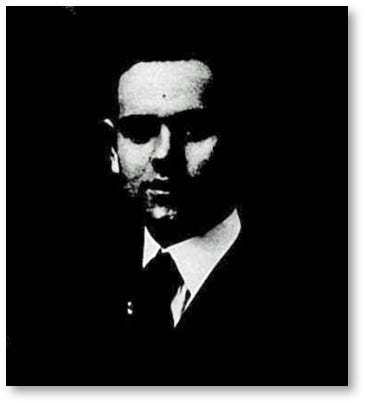
Whose child was John J. Neumeyer, born 1895? (Ancestry)
John lived with her until she died when he was 24, but even three years before then, he expressed his confusion when applying for citizenship, saying, “I was informed I was born in England — I do not know of what parents. I remained in England until I was 11 months old when I was taken to Syria where I remained until I was six years old. I have lived in the United States ever since.”
He also noted that, “I am informed by Mrs. Mary Neumeyer who for some time claimed to be my grandmother,” revealing that he was no longer convinced that she was.

Declaration of Intention for John Neumeyer (Monmouth County Archives, NJ)
I don’t think it’s any accident that when she died in 1920, he made plans the next month for a trip to England. His passport application and the local newspaper said it was to study for the ministry, but he only stayed for three months. I suspect that among his grandmother’s papers, he had found traces of Rose, and believing her to be his closest living relative, went to try to meet her. Or conceivably, the two of them had managed to connect the dots several years earlier when Rose had begun using “Numeyer” as a middle name. In any case, his inheritance from his grandmother (and yes, it appears that she really was his grandmother) allowed him to make the trip.
I’d like to think John and Rose met, but the question in my mind is whether they were siblings or cousins.
John’s grandmother had said that he was her son’s son. And John’s very existence would seem to lend credence to the tale about JJ already having a first wife and child when he married Mary E. Wood, but other “facts” of the two Marys clash.
If the alleged son’s date of birth is correct and he was born in England, how could that timing have worked? He would have been born after Rose, not before, so he couldn’t have already been taken to Syria. The younger Mary would almost had to have been his mother, meaning that she would have been very pregnant when crossing the Atlantic and given birth to three children in two years — two with her disavowed-husband and one with her new one — with barely time to breathe in between. And even if that happened, why is there no birth record in England for such a child, and why is there no mention of him in all the news coverage about Rose’s adoption? Wouldn’t her having a local, infant brother have at least been mentioned in passing?
Two other possibilities come to mind. It could be that the story about JJ having a son from a previous marriage was true, but it was earlier and not in England, so the child was a bit older — say, born in 1893 or 1894. Or maybe — just maybe — John was really Sultana’s son.
It’s hard to avoid noticing that he was born the same month that she died. True, he was born on the 21st and she died on the 5th (and yes, I tried to verify, but failed to obtain relevant Lebanese records), but with all the other truth-stretching floating about in this family, what’s a gentle tweaking of dates?
I think it’s plausible that Sultana died in childbirth, and that her husband either chose to or was persuaded to leave his child with his in-laws and return to America. It was 1896 and he was a widowed, 22-year-old student with a half-Syrian child. He came from a family that was ambivalent about his marriage and he was dealing with a strong-willed mother-in-law who had the home court advantage since this would have taken place in Syria.
Whether John was JJ’s child or Sultana’s, using the Neumeyer surname and borrowing aspects of Rose’s life would have made things easier for his grandmother as she returned to the United States to begin a fresh chapter with a little boy by her side. And if John was JJ’s son from a previous marriage, she would have needed to nudge the date of his birth by a year or two so that it could have happened during the brief period JJ had lived in England.
Barring unanticipated revelations (such as Lebanon providing the requested records or the unearthing of the missing Board of Guardians records in England), the only way to solve this riddle would be through DNA testing. But this situation is complicated and there are four clusters of potential participants to consider — those descended from 1) John, 2) Rose, 3) Mary E. Wood’s second marriage, and 4) Sultana’s husband’s second marriage.
I have researched descendants in each branch, and all indications are that none of them is aware of this story or their connection to it. Normally, I contact relatives before publishing, but this family history is so complex that for the first time ever, I decided to write first and reach out to family members with a link so they can absorb it (or not) at their own pace.
I hope that they will be pleased to learn more about their heritage and see a couple of out-of-the-blue family photos from 1890. If any should choose to allow me to share their reaction, I will post updates here, but I am not going to try to persuade anyone to take a DNA test. My goal was simply to try to find out what had become of the young woman in the photo, so everything else is up to them.
They say a picture is worth a thousand words, but sometimes it takes considerably more than a thousand words to explain one. I hope you’ll agree that this one deserved 3,400.
¹ All quotes in this paragraph are from “A Harvard Romance,” Worcester Daily Spy, 10 February 1895 (Newspapers).
² Efforts were made to uncover any prior marriages JJ might have had to determine whether he was a bigamist, but marriage records of that era were hyper-local and nothing has been found in likely locations to date.
³ Details of Rose’s mother’s account are from “A Scunthorpe and Lincoln Romance,” The Lincolnshire Chronicle, 27 November 1895 (BritishNewspaperArchive).







Leave A Comment