
A Special Photo Finds It Way Home 130+ Years Later
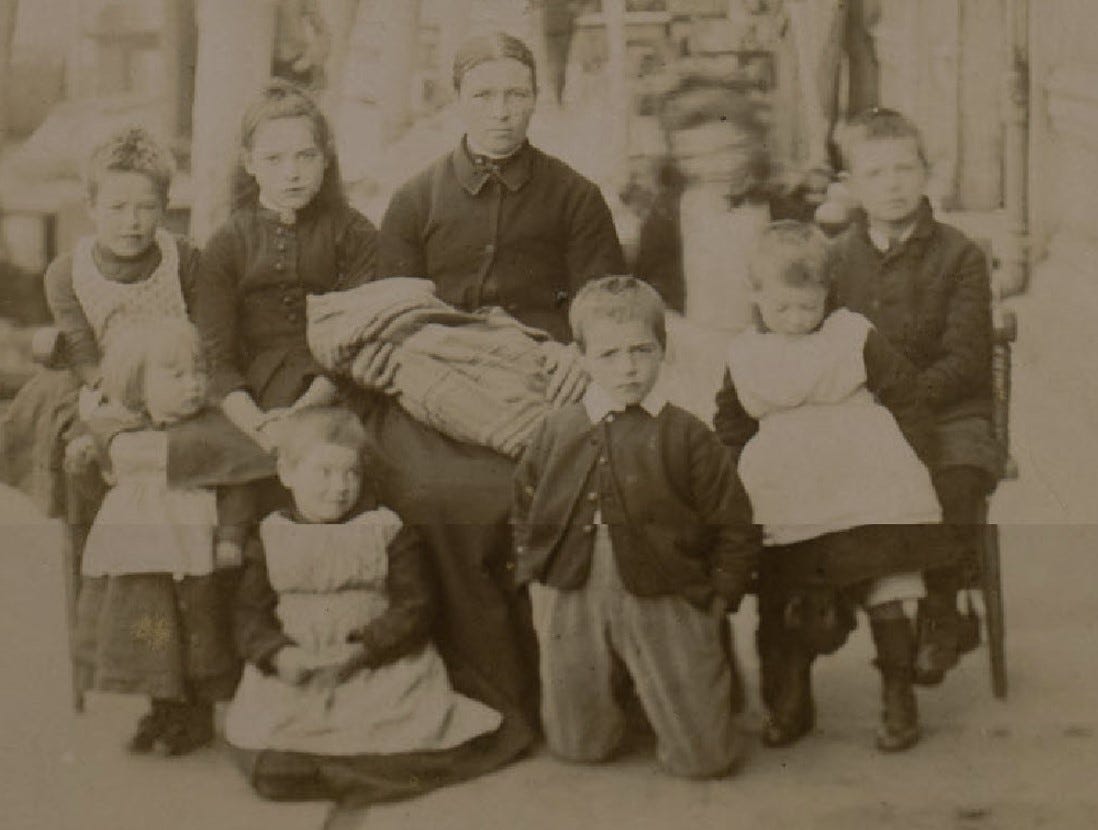
Mrs. Lillicrap and her nine children
Bessie Lillicrap must have been exhausted when she arrived in New York with her children. The family had left Liverpool on October 7, 1890 and finally disembarked on the 18th. That’s a long time to be at sea with nine children, the oldest of whom was only 12.
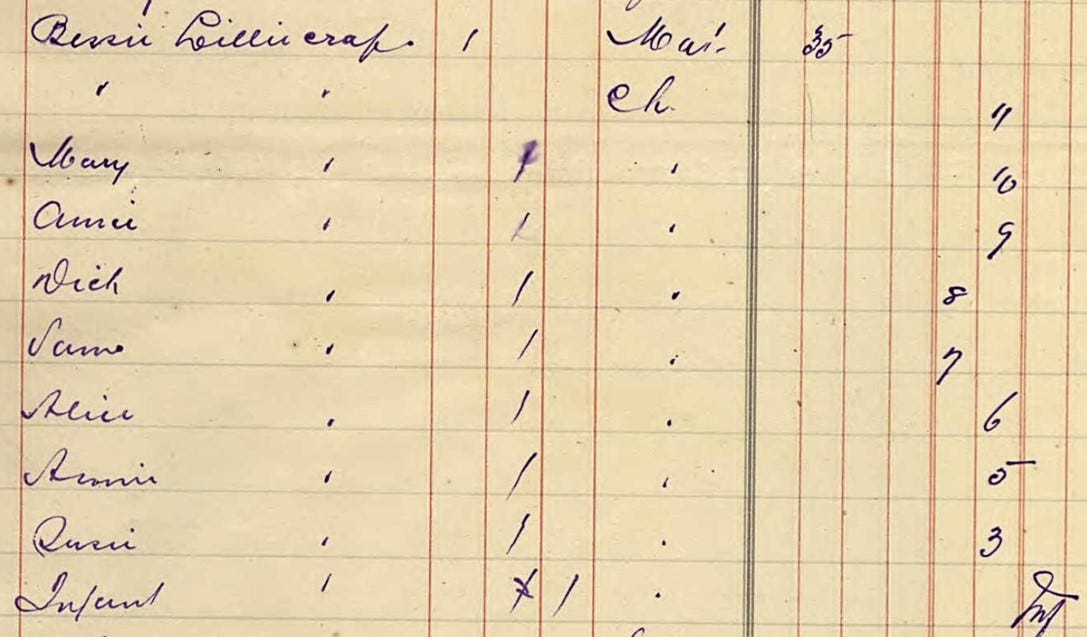
U.K. departure passenger entries for Bessie Lillicrap and her nine children (UK National Archives via Ancestry)
So she may have been less than enthusiastic when a man named E.W. Austin approached her about photographing them. Still, it wasn’t an every day opportunity for a poor family like hers, so she agreed. She, Bessie, Susie, Annie, Mary, Dick, Sam, Alice, Emily and baby Thomas were captured for posterity on that day just over 130 years ago.
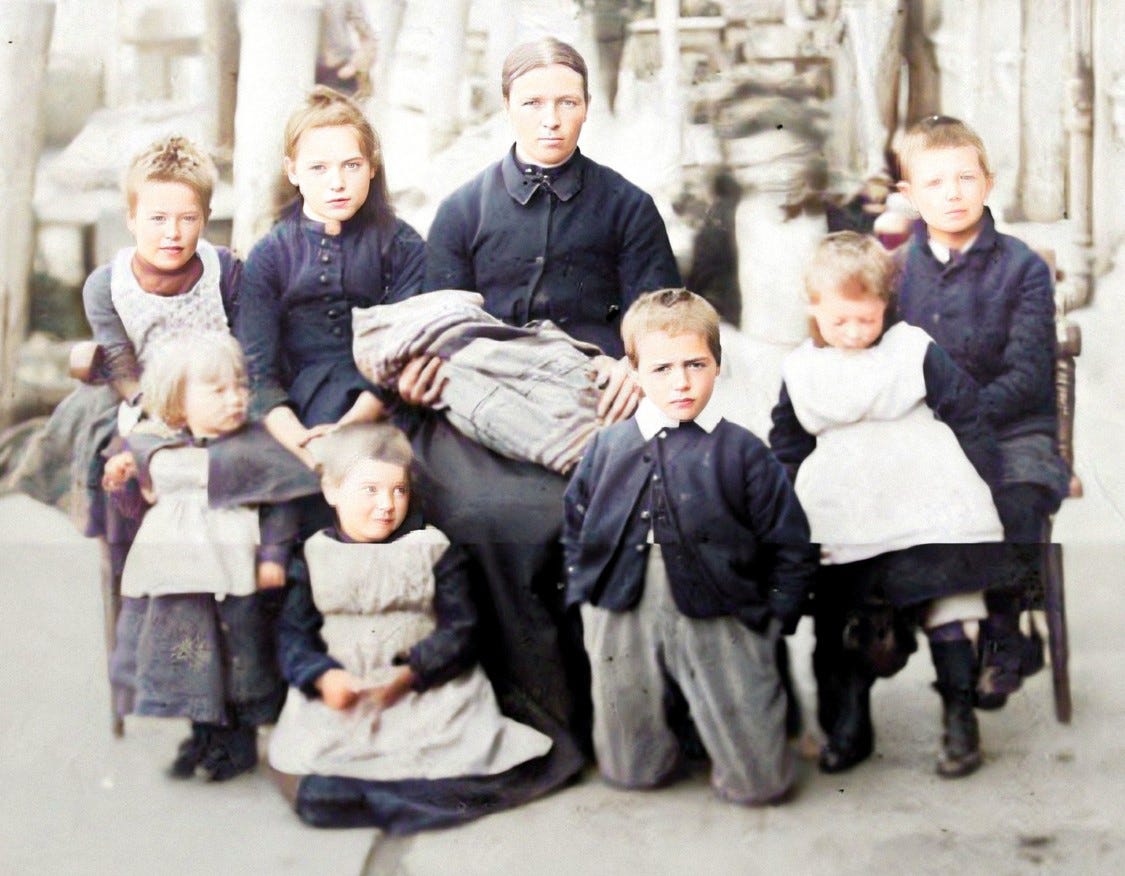
Mrs. Lillicrap and nine children (colorized and enhanced on MyHeritage)
E.W. Austin had been fortunate enough to gain the money exchange concession to service immigrants arriving in New York in 1890, and while Ellis Island was under construction, he worked at the Barge Office which served as the interim immigrant processing center. As described in a previous article, he took this opportunity to take photos of immigrants from a variety of countries, and the result is the earliest known collection of this type.
While he scribbled notes about his subjects, they were usually restricted to nationality and maybe another random detail, but in this instance, he had written, “Mrs Lilycroft age 35 & 9 children Oct 18 to 25 1890.” With all this information, it didn’t take long to find them in passenger arrival records in spite of the misspelling of the Lillicrap name.
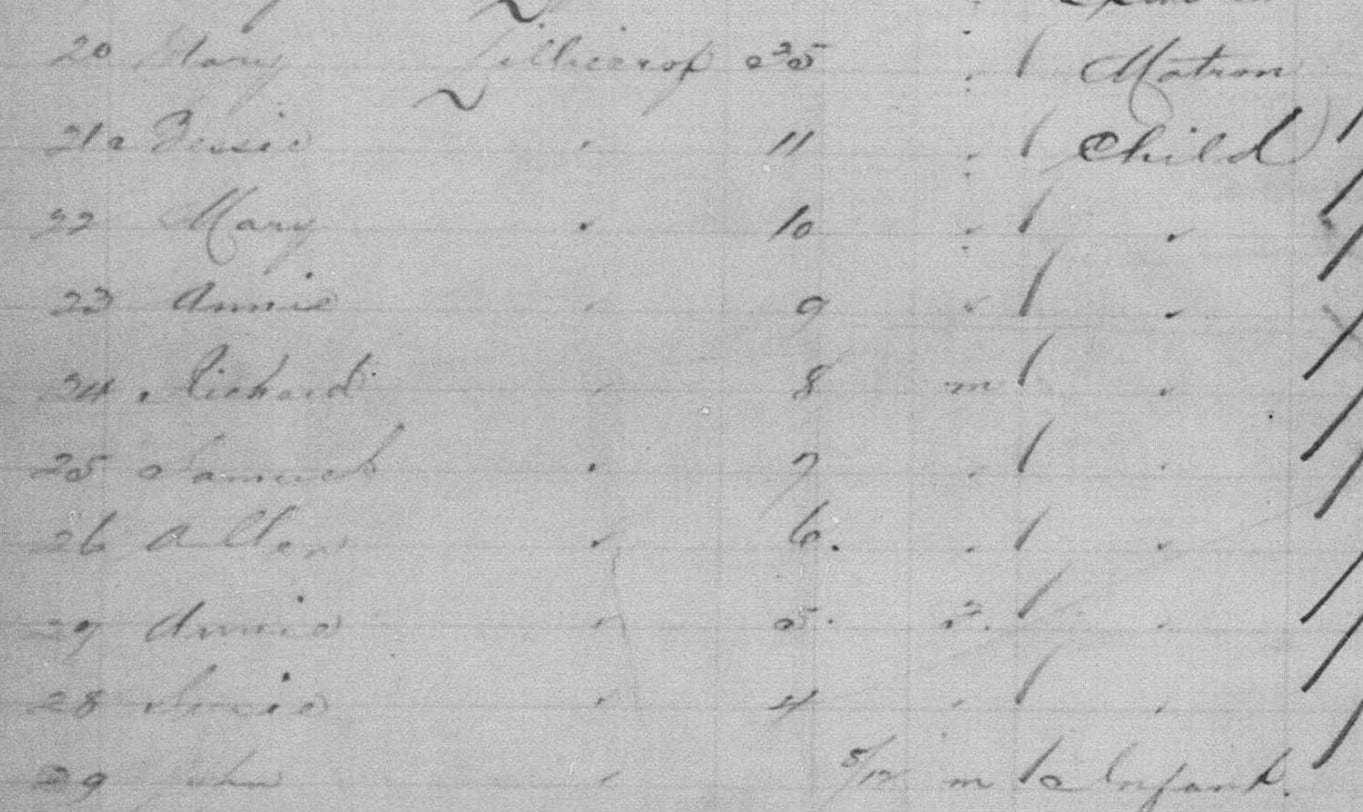
Passenger manifest entries for Lillicrap family members (National Archives and Records Administration via FamilySearch)
But what had become of them? It was handy to have such a large family to research as I was able to trace them to Adams County, Mississippi — although it might be more accurate to say that I located the survivors with their father, Richard, in the 1900 census.

Lillicrap family in the 1900 Federal census, Adams County, Mississippi (National Archives and Records Administration via Ancestry)
Four of those in the photograph had died during the intervening decade, and the specifics I would learn would make this harsh reality even more distressing. I discovered that 11-year-old Mary had succumbed to “tonsillitis and croup” in 1892, and Annie to phthisis (pulmonary tuberculosis) the following year. Life was clearly a struggle for the Lillicraps because I turned up another daughter in a nearby orphanage in 1900, but that still left the mother and Thomas unaccounted for.
At this point, my sleuthing went into overdrive because I had to know, but nothing I tried answered my question — until I found a single newspaper article that sadly solved the mystery. The mother, Bessie (Edworthy) Lillicrap, hadn’t lasted a year in America. Nor had Thomas. Both died from malaria in August of 1891 in a small community called Church Hill, Mississippi.
Desperate, Richard had piled his remaining children on a train and headed about 20 miles away to Natchez to seek help. All were ill and the family was described as, “entirely destitute of means, and with scarcely clothing enough to hide the nakedness of the little ones.” The town took pity on them with both the hospital and Baptist Church pitching in, and as seen by the 1900 census, most of the Lillicraps had rebounded.
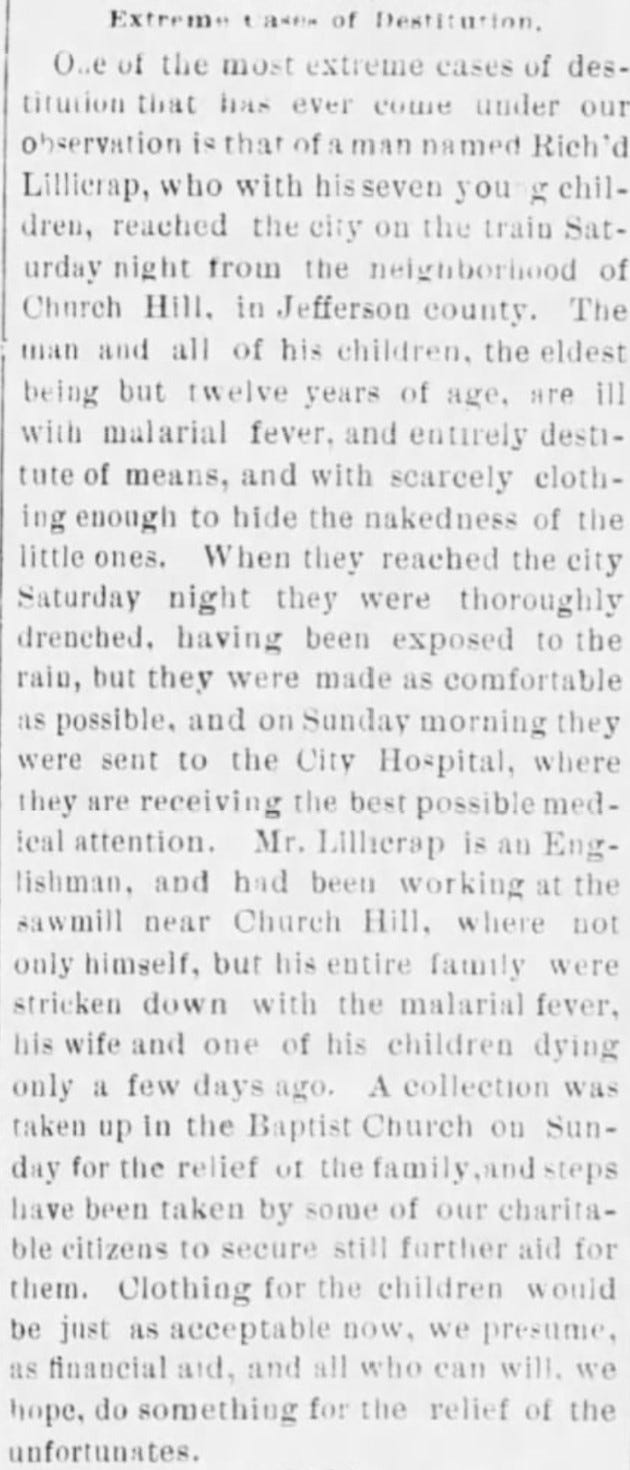
The Weekly Democrat (Natchez, Mississippi), 26 August 1891 (Newspapers)
Now that I knew what had happened to the family, I turned my attention to finding their descendants. Did they, I wondered, know of this photo that included even baby Thomas during his brief life? I followed the lines of each of the surviving children, identifying living grandchildren and great-grandchildren, but once I figured out that one of the sons had married late, I saw a chance to reach out to someone whose father, aunts and uncles, and grandmother were in the photo. She was my first call.
“I can’t believe this,” Mary declared as I rattled off a few family names to quickly reassure her that I wasn’t looking for anything from her, but hoped instead to share something with her. She confirmed details, and then mentioned that her father had a brother and four sisters. I explained that there had been three other siblings who died young.
We chatted a while, and I offered to snail mail a copy of the photo since she didn’t have a computer or cell phone. To say she was delighted would be an understatement. I would have given anything to be there when she opened her mail, but got the next best thing when she called back, carefully identifying herself as “Mary Louise Lillicrap Milligan” and telling me about her upcoming plans. It seems the photo has lit a spark. She’ll be heading to the local library shortly and has already arranged a jaunt with a friend to Church Hill to see if they can find where her grandmother is buried. “I’m 83,” she exclaimed, “and just now learning about my family!”
The Lillicrap family uprooted themselves and crossed the Atlantic for new lives 131 years ago, and remarkably, their moment of arrival was captured. And now after a very different kind of journey tucked away in a photo album belonging to a stranger, it’s finally gone home.








Leave A Comment